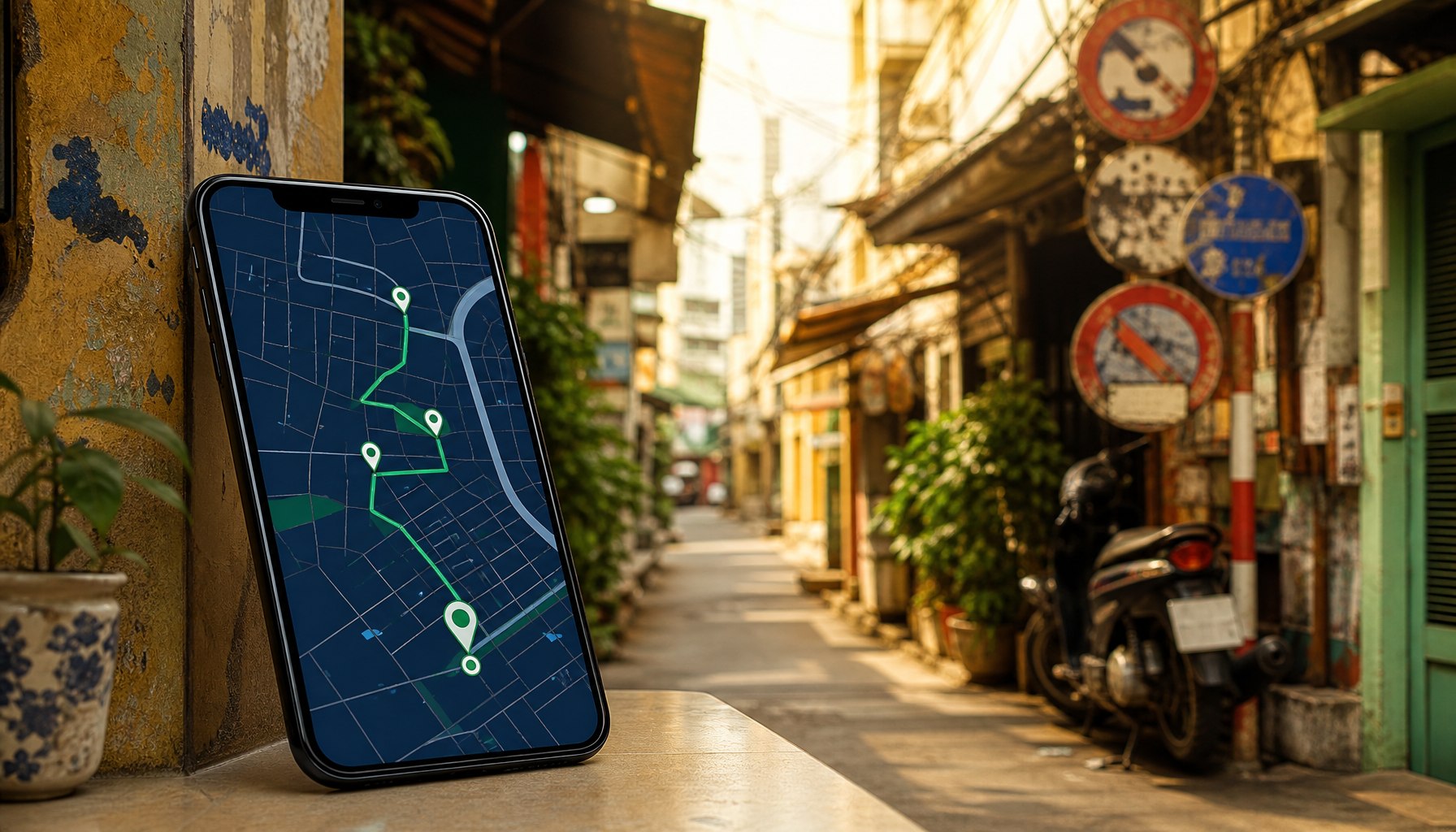
When an order note says: "Deliver to Ten Lua area" or "Near Hang Xanh intersection", international routing systems often get confused and throw an error. The reason is simple: on official administrative maps, these areas do not exist as a specific ward or street.
But for local residents, these are the most familiar and easy-to-visualize "anchors". The vast majority of drivers and buyers automatically understand and navigate based on these grassroots landmarks.
Rapid urbanization brings new faces to cities, accompanied by renaming streets and reassigning house numbers. However, there is always a lag between system updates and human habits.
Global maps often prioritize tidiness: old numbers are deleted to immediately make way for new ones. But people are still used to the old house numbers they have lived with for years when shopping online.
The result is that shippers frequently find themselves "standing in the middle of the street but unable to find the house number," forcing them to stop and make a phone call. Each 1-2 minute call to ask for directions seems small, but multiplied by thousands of orders daily, it represents a massive waste of time and effort for the delivery fleet.
Vietnamese people have a very intimate and practical way of giving directions: using landmarks instead of rigid house numbers. "The green house, opposite the high school gate", or "Go to the end of the alley and turn left" are extremely clear instructions for a local driver.
However, for foreign Natural Language Processing (NLP) models, phrases like "opposite", "next to", or "alley" are often treated as stop-words and filtered out by the computer. The technology tries to trim everyday speech to fit a standard format, inadvertently stripping away the most crucial navigational clues the customer wanted to convey.
To cope with inaccurate address inputs, many shopping apps require users to select the exact Ward/Commune from a pre-defined drop-down list. But when administrative boundaries change (such as the merging of districts), many users are suddenly confused when they can't find their familiar hometown address.
This confusion sometimes frustrates them enough to abandon their shopping carts midway. Technology was born to serve humans. An outstanding map platform is one that flexibly embraces the natural habits of its users, making them feel completely comfortable and familiar when shopping.
Deeply understanding these small stories, MapVina has built a map system based not just on dry administrative data, but on a profound understanding of local culture:
Behind a line of address on an app is not just GPS coordinates or a standard house number. It is an entire world of habits, memories, and lifestyles of Vietnamese consumers. When a map system can "listen" to the voice of the customer — even when they call out names in their own way — everything becomes easier. Shippers don't have to stop mid-street to call and ask. Customers aren't frustrated by failing to find their familiar address. And businesses can focus on serving better, instead of solving unnecessary technical friction.
Let MapVina accompany your business in digitizing local habits, bringing a seamless experience from the moment an order is placed to when the gift reaches their hands.
Moving this industry forward requires not only skill, talent and expertise, but also imagination. All are welcome.