Every day, a mid-sized delivery company in Ho Chi Minh City processes around 3,000–8,000 orders. Of those, roughly 6–10% run into problems before reaching the customer: missing house numbers, customers writing old ward names, shippers calling with no answer, orders falling into restricted delivery hours, or failed first-attempt deliveries with no rescheduling in sight. Each issue seems minor in isolation — but summed up over a month, they generate hundreds of hours of manual work, thousands of confirmation calls, and a return rate that quietly erodes profit margins.
The question is no longer "can AI help logistics?" but rather "where do we start, with what tools, to see results fastest?" This article looks at 5 very specific operational problems that Vietnamese logistics companies face every day — and how combining AI, n8n (an open-source workflow automation tool), and local map data can address each one practically.
This is the most familiar yet most persistent problem in Vietnamese logistics. Customers enter addresses the way they naturally describe locations in daily life: "Alley 120 Le Van Sy, near Phu Nhuan Market", "Ten Lua area, across from the secondary school", "small alley next to Pho Hoa, Binh Thanh". To locals, these descriptions make perfect sense. To an order management system, a delivery app, or any geocoding API, they are strings of text that are nearly impossible to process automatically.
The practical consequence: dispatch staff must read each order, call for confirmation, manually correct the address, then reassign the delivery zone. An experienced coordinator can handle about 15–20 ambiguous-address orders per hour. If 300–500 orders out of 5,000 daily have this issue, the company needs at least 2–3 people just for address verification.
How to solve it with AI + n8n + local map data:
The workflow works like this: when a new order enters the system (via API, webhook, or Google Sheet), n8n triggers an automated flow. First, AI (via an LLM API) reads the free-text address and extracts its components: house number, street name, alley, ward, district, landmark notes, and reference points. Then n8n calls the MapVina Geocoding API to verify coordinates. If the API returns a high-confidence result, the order is automatically assigned to a delivery zone and moved to routing. If not, the order is flagged as "needs verification" with the AI's analysis attached — so staff can resolve it in 1–2 minutes instead of starting from scratch.
Reference numbers: A delivery company in Ho Chi Minh City used to spend an average of 4.5 minutes per ambiguous-address order (read → call → correct → reassign). After deploying an AI pre-filtering workflow, 55–60% of ambiguous orders are handled automatically. The rest take 1–2 minutes because the AI has already prepared the relevant information. Estimated savings: 35–45 staff hours per month just on address verification.
A key requirement: the map API needs to understand local Vietnamese context. "Khu Ten Lua" is not an official street name, but every Saigonese knows it refers to the area around Ten Lua Street, An Lac A Ward, Binh Tan District. A mapping system that understands Vietnamese folk place names will deliver significantly more accurate geocoding than a purely international API.
First-attempt delivery failure is a fact of life in logistics. In Vietnam, the First Attempt Delivery Failure rate runs between 12–18% depending on the area and product type. The reasons vary widely: customer not answering, rescheduling, wrong address, restricted delivery zones during peak hours, riders unable to navigate narrow alleys, or customers simply changing their minds.
The problem is not the failure itself — it is the speed of response afterward. In many operations today, the process looks like this: rider notes the reason in the app → dispatcher reviews at end of day → CS staff calls the customer the next morning → reschedule → wait another 1–2 days. From failed delivery to successful re-delivery can take 2–3 days. In that window, customers may cancel, switch to a competitor, or leave a negative review.
How to solve it with AI + n8n:
The moment a rider marks an order "delivery failed" in the app, a webhook sends the data to n8n. AI reads the rider's note (typically informal shorthand: "no answer", "wrong address", "alley too narrow", "customer says deliver tomorrow") and classifies it into categories: unreachable, wrong address, customer rescheduled, infrastructure issue, customer refused.
Based on the classification, n8n automatically routes the order into the right response flow:
• Unreachable: automatically sends a Zalo/SMS message asking the customer to confirm a new delivery window; if no reply within 2 hours, escalates to CS for a phone call.
• Wrong address: calls the MapVina API to re-verify coordinates and sends the customer a message with a map link to confirm their exact location.
• Customer rescheduled: automatically creates a re-delivery order for the requested time slot and queues it for the next day's dispatch.
• Restricted zone / narrow alley: flags the location in the system so the next dispatch assigns an appropriate vehicle or schedules a different time window.
The most important shift: the time from failed delivery to customer notification drops from 12–24 hours to 15–30 minutes. This window is decisive — customers reached quickly usually agree to a re-delivery; customers left waiting often cancel. Every cancellation caused by slow response means not only lost revenue but also sunk outbound shipping cost already incurred.
Most logistics operations only find out an order is late when it already is — usually when the customer calls or the rider reports they cannot make it. By then, the CS team is apologizing, dispatch is scrambling to rearrange, and the company's reputation takes a hit. For B2B clients, repeated late deliveries can mean lost contracts.
In reality, the warning signs appear well before the actual delay. Common early signals include:
• A rider is carrying more orders than the remaining time window allows.
• A delivery zone has unusually high order density (major sale, public holiday).
• An order is destined for a congestion-prone area during the 5–7 PM peak (Nguyen Huu Canh, Saigon Bridge, Ly Thai To roundabout…).
• An order requires delivery before noon but has not left the warehouse by 10:30 AM.
• A rider is currently far from the next scheduled delivery point.
How to solve it with AI + n8n + map data:
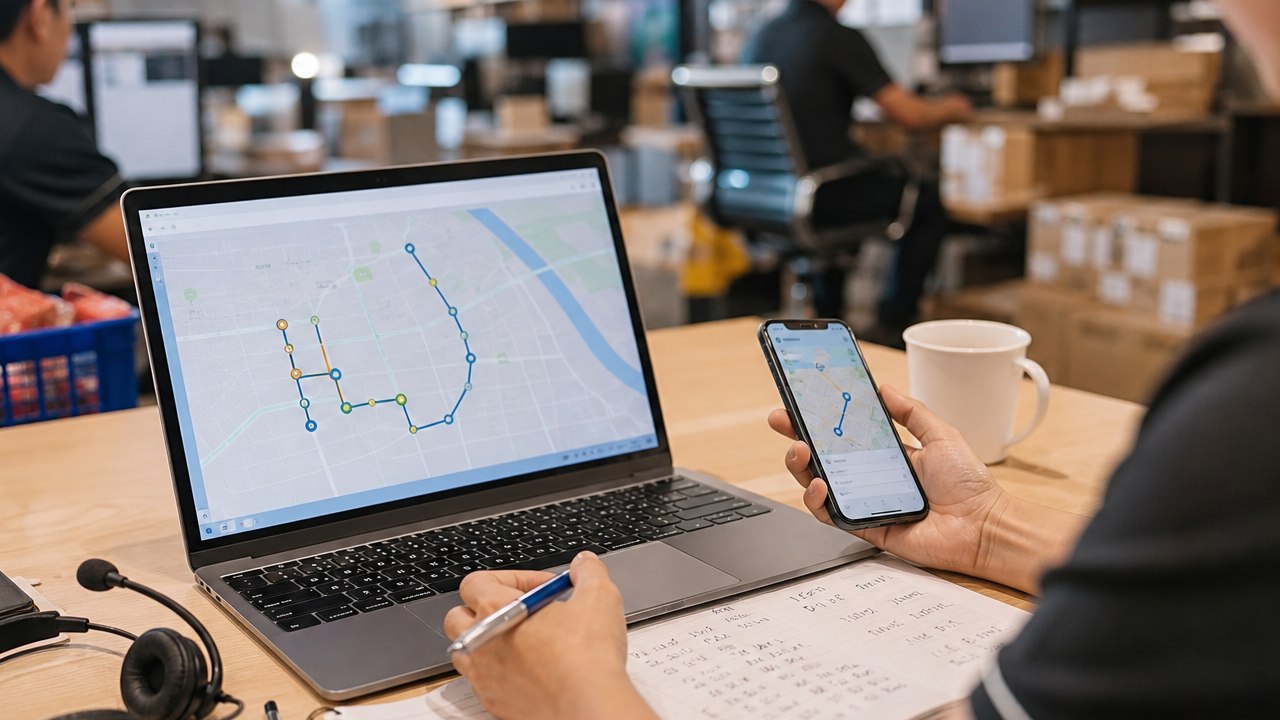
n8n runs a scheduled workflow every 30–60 minutes: pulls the list of active orders, checks rider locations, compares them against delivery-point coordinates (via MapVina API), and estimates remaining distance and time. AI synthesizes the analysis: which orders are at risk based on distance remaining, the rider's current load, committed time windows, and zone conditions.
Results are sent automatically: alerts to dispatch via internal Telegram/Zalo, suggestions to reassign an order to a closer rider, or proactive messages to customers: "Your order may arrive approximately 30 minutes later than expected — we apologize for the inconvenience."
A soft but very real value: when customers are notified 30 minutes ahead, complaint rates drop significantly. Logistics cannot eliminate delays caused by heavy rain, traffic, or hard-to-find addresses — but it can eliminate the feeling of being ignored. A proactive message sent before the customer has to call changes the entire experience.
From a COO perspective, the early-warning system also generates valuable data: which zones consistently run late, which time windows carry the highest risk, which riders are regularly overloaded. This is the foundation for improving route planning and adjusting operational capacity in real time.
At many small and mid-sized logistics companies, the end-of-day report is still a surprisingly manual process. An operations staff member opens the order management system, exports a file, opens Google Sheets, filters by zone, counts successful / failed / returned deliveries, calculates ratios, notes special cases, and sends everything via Zalo to the manager. This takes 1.5–2 hours every evening — and the result is usually a table of dry numbers that the manager must read and interpret on their own.
How to solve it with AI + n8n:
n8n is configured to run automatically at 8:00 PM daily: it connects to the order management API, retrieves all delivery data for the day, and groups it by zone and rider. AI analyzes the data and generates a narrative report — not just numbers, but actual observations:
• "District 7 had a 94% successful delivery rate today, above the weekly average (89%). Rider Minh handled 47 orders, the highest on the team."
• "Binh Tan zone had 12 returned orders due to wrong addresses, concentrated in An Lac A Ward. Suggestion: review the order source from Platform X, as 8 of the 12 returns came from there."
• "Estimated total shipping cost today: 42.3 million VND, up 8% from yesterday due to 23 re-delivery orders."
The report is automatically delivered via Telegram to operations management, with a detailed Google Sheet attached for deeper review if needed.
CFO perspective: the hidden cost of manual reporting is not just 2 hours of staff time per day (roughly 60 hours/month ≈ 8–10 million VND). The bigger cost is delayed information: if the manager only gets the report at 8 PM but the problem happened at 2 PM, the company has already lost 6 hours of reaction time. An automated workflow can send alerts the moment a metric goes out of range — no waiting until end of day.
When a logistics company signs a new enterprise contract — a 50-branch retail chain, a distributor with 200 fixed delivery points, or an e-commerce platform switching logistics partners — the first step is almost always receiving an Excel file with a list of delivery addresses.
And this is where the trouble starts. Enterprise Excel files typically contain every format imaginable: some rows with a full address (house number, street, ward, district), some with just "Thu Duc branch", some using pre-merger district names (District 2, District 9, old Thu Duc District), some in English, some missing postal codes. If imported directly without standardization, geocoding success rates can be as low as 50–60%, and the operations team will be manually correcting entries for the entire first week.
How to solve it with AI + n8n + MapVina API:
The workflow receives the Excel file (via email, Google Drive, or direct upload). n8n reads each row, sends the address field to AI for analysis: extract components, standardize ward/district names to current administrative boundaries, fill in missing postal codes, and flag addresses using old names. n8n then calls the MapVina Geocoding API to fetch coordinates for each standardized address.
The output is a new Excel file with additional columns: standardized address, coordinates (lat/lng), confidence score, and notes (for any rows that need manual review). Staff only need to check the low-confidence rows instead of reviewing all 200 entries.
Real case: A delivery company in Hanoi signed a new contract with a chain of 120 stores. The original address file had 28% of rows using old district/county names (post-2024 administrative merger), 15% missing house numbers, and 8% written in English. Manual processing would have taken an estimated 3–4 staff days. With the AI + geocoding workflow, automated standardization took about 20 minutes; staff only needed to review 35 flagged rows — total time under 2 hours.
This is not a daily problem, but every time it occurs it has a significant impact on the first impression with an enterprise client. Getting the data clean and accurate from day one makes the first week of operations smoother, reduces complaints, and builds a solid data foundation for the entire partnership ahead.
None of these five problems require building a massive AI system from scratch. Each workflow can start independently: pick the highest-frequency pain point, design the workflow in n8n, connect AI to handle the natural language layer, use a local map API to resolve the location layer. When one workflow runs stably and delivers measurable results, expand to the next problem.
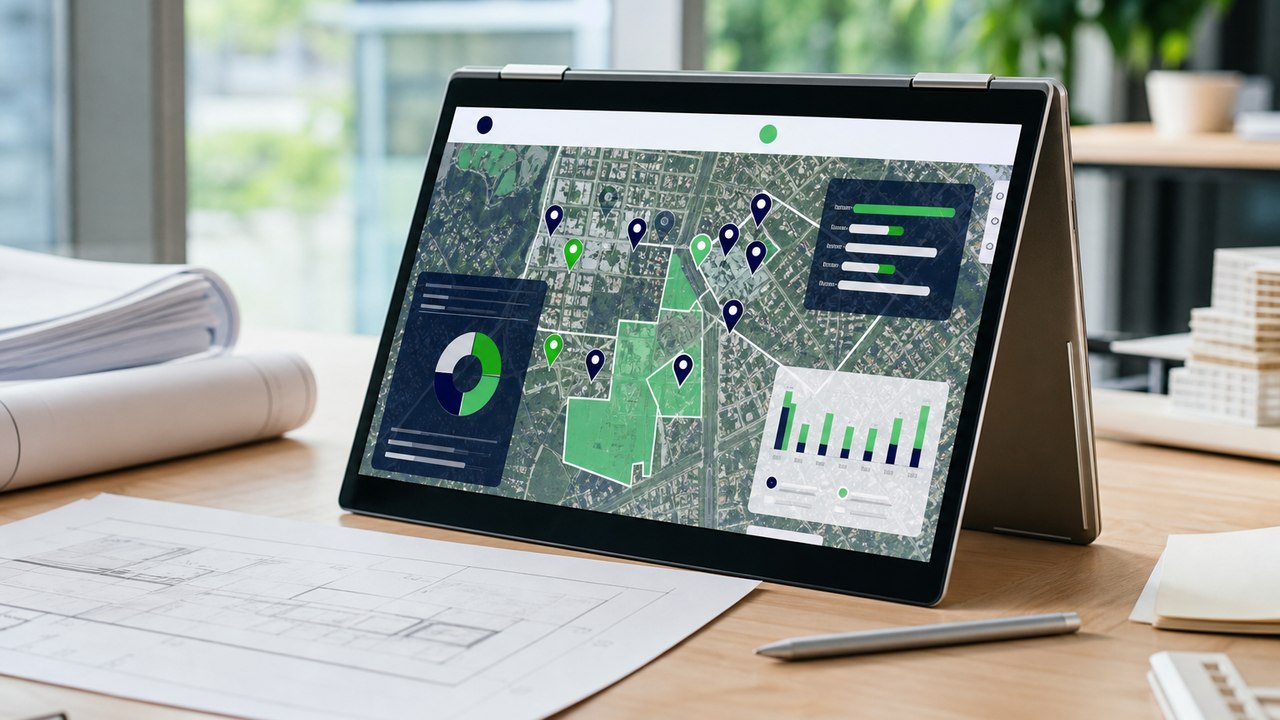
What all five problems share is the need for accurate location data in a Vietnamese context — where alleys and lanes are complex, folk place names are common, administrative boundaries change regularly, and the way people write addresses is very different from international standards. MapVina can support this layer: a Geocoding API that understands Vietnamese place names, Reverse Geocoding for precise coordinates, a Search API for finding local landmarks, and a Tile API for displaying maps in operational dashboards.
If your logistics operation is ready to try automating one workflow at a time, start with whichever problem causes the most friction each day. Results are usually visible within the first 2–4 weeks.
Chat with MapVina to discuss your specific operational challenge, or explore the API documentation to start integrating today.
Moving this industry forward requires not only skill, talent and expertise, but also imagination. All are welcome.